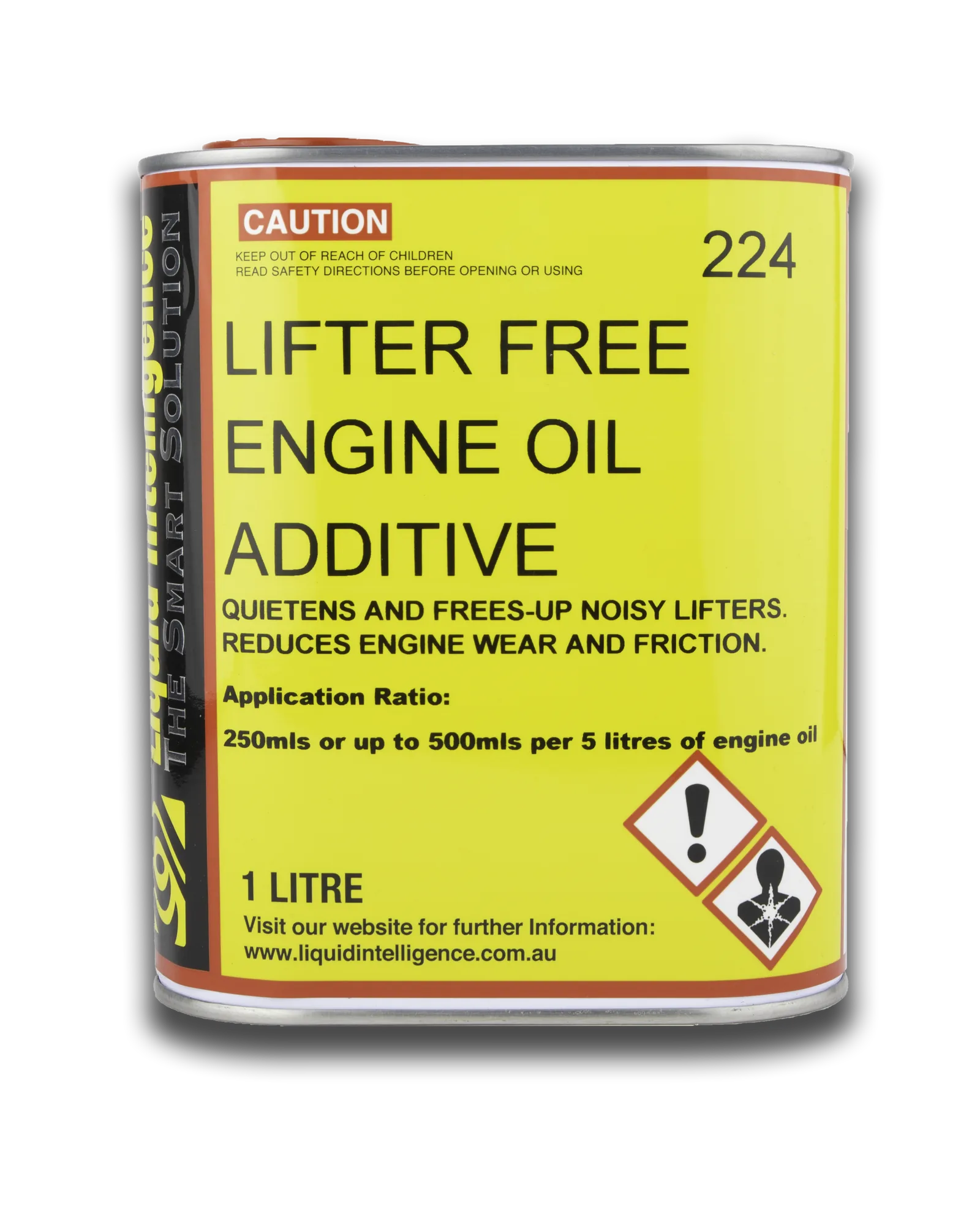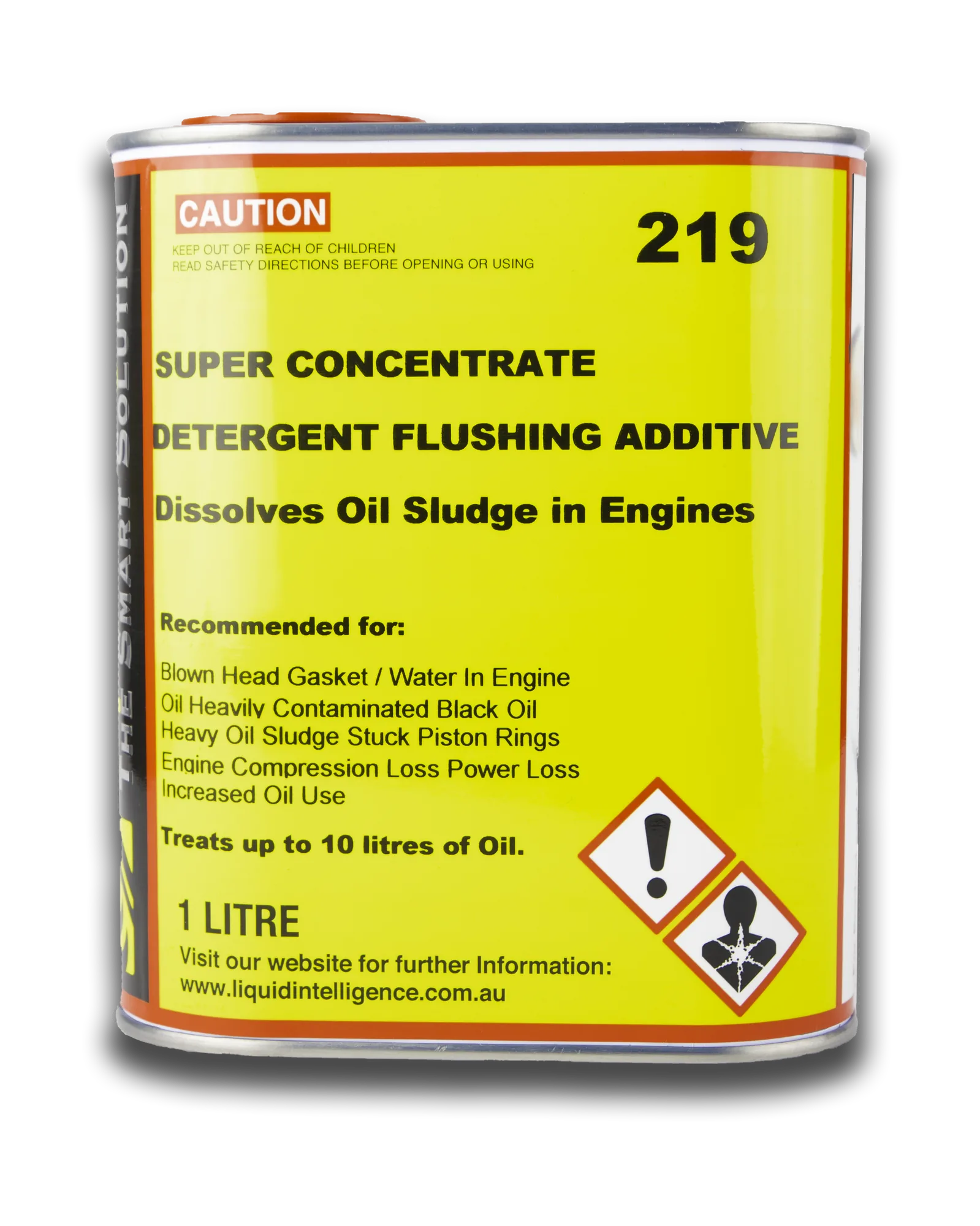
Liquid Intelligence No. 219
Engine Flushing Additive
Dissolves oil sludge safely, 100% active purpose-specific detergents.
- ✓Dissolves engine oil sludge safely
- ✓No solvent damage to seals
- ✓1L treats up to 10L of engine oil
- ✓Suits vintage through heavy commercial
Engine Flushing Additive
Liquid Intelligence 219 is a blend of 100% active, purpose-specific detergents that dissolves hard-to-remove engine oil sludge, gum, varnish and carbon. It also cleans deposits, solid wear particles and residues from every internal engine component, including the piston rings.
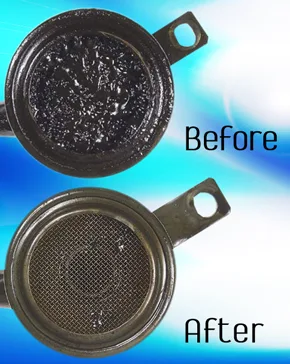
It contains no solvent. Solvent-based flushes, or solvent mixed with oil, can damage oil seals and O-rings and even cause a crankcase explosion; 219 won't harm seals, gaskets or bearings, or degrade Viton, nitrile, neoprene or silicone seals.
It suits all petrol, diesel and LPG engines, turbocharged and supercharged ones included, and all mineral and synthetic motor oils. One litre treats up to 10 litres of engine oil, in anything from cars, 4WDs and motorcycles to trucks, boats, forklifts, farm machinery, cranes and earth-moving equipment.
Oil sludge, and what it does
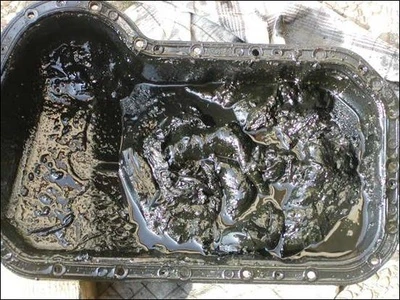
Oil sludge is the breakdown product of overstressed oil: oil stressed by contaminants and oxidation from working thousands of kilometres longer than it was designed to. It can look like heavy grease or tar, and it first appears in the oil pan and under the valve covers.
Sludge causes stuck piston rings, compression loss, power loss, high fuel consumption, oil pressure problems and even overheating, and it can block the lubrication system until the engine seizes. Look out for:
- Heavily contaminated black oil
- Oil that looks dirty within 1,000 kilometres of an oil change
- Sludge under the oil cap
- Increased oil use, or blue smoke from the exhaust
- Misfires, power loss or compression loss
Why more engines sludge up
To pass tougher emissions standards, manufacturers raised engine operating temperatures and increased exhaust gas recirculation, and leaner fuel mixtures burn hotter still. Sludge first appeared in Australian vehicles in the late 1980s and can affect almost any later model petrol engine. It usually traces back to missed or extended oil changes, or poor quality or unsuitable oil.
Diesels sludge up differently: their oil takes far more unburnt fuel and combustion soot, which thicken it until the engine is starved of oil. The small diesels in light commercials and 4WDs are most at risk, with their high power output, small oil capacity and the extra heat from turbochargers. Blocked injectors that over-deliver or don't atomise the fuel properly add to the soot; for those, see 218 Diesel Purge and Restore.
When it isn't sludge
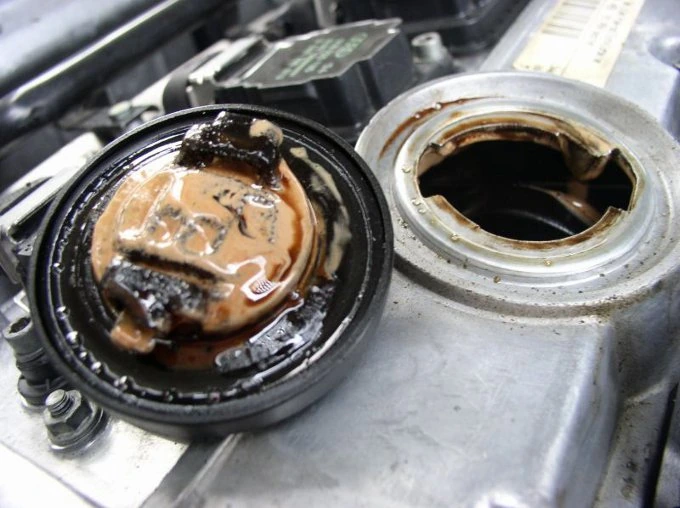
A whitish, cream-coloured sludge on the inside of the oil filler cap, like vanilla yoghurt or mayonnaise, is an oil and water emulsion from a leaking or blown head gasket. The cap is cooler than the rest of the engine, so the mix condenses there. If your oil level is going up while your coolant level goes down, that confirms it: see 245 Blown Head Gasket Repair.
Flushing now can save thousands
Periodic engine flushing is normal for cars and trucks after 100,000 kilometres, and it can prevent seizures and further sludge damage. Engine rebuilds and replacements because of sludge are commonplace, and expensive: $4,000 to $10,000 for a typical car, $6,000 to $25,000 for a truck, and $100,000 to $300,000 or more for a large mine site engine. A heavy build-up is best removed by dismantling and cleaning the engine, but lesser amounts can be treated without dismantling it.
Blocked variable valve timing (VVT)
VVT solenoids direct oil pressure to the camshaft phasers, which adjust the timing of the intake and exhaust valves to suit the driving conditions. That needs clean, uninterrupted oil flow. As oil heats and cools it leaves varnish, gum and carbon behind, and those deposits build up in tight passages like the solenoids', especially when oil changes are neglected or the wrong oil is used.
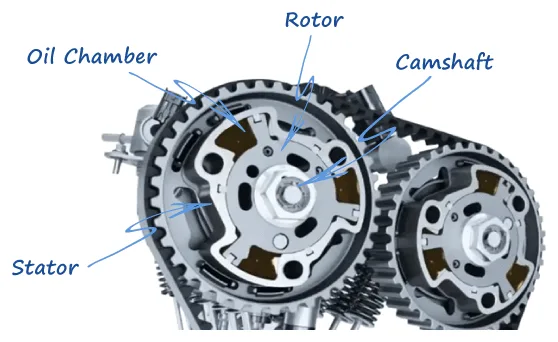
Signs of a blocked VVT system:
- A rough idle that fluctuates up and down, or stalling at low revs
- Loss of power or sluggish acceleration, most noticeable between 2,000 and 4,000 rpm where VVT normally comes in
- Poor fuel economy
- Pinging or knocking under load, particularly up hills
- A check engine light with VVT fault codes such as P0010, P0011, P0012, P0020, P0021 or P0022
- A brief rattle from the timing chain or cam phaser on a cold start
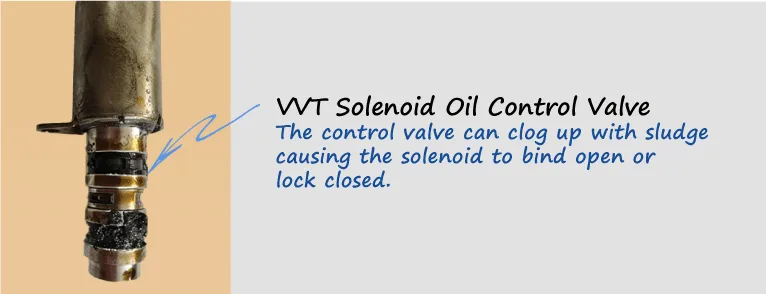
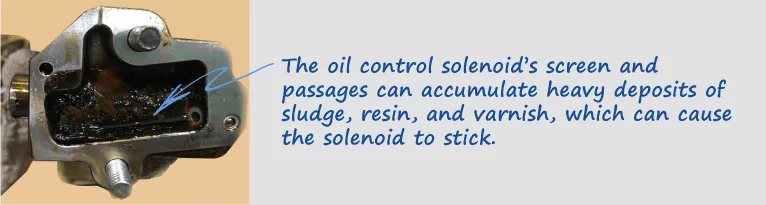
In mild cases, removing the solenoids and cleaning them carefully with isopropyl alcohol or electrical contact cleaner may restore them, as long as their filters and oil galleries aren't badly blocked. If cleaning doesn't work, replacing them may be the most reliable fix. Or flush the whole engine internally with 219, which is especially effective on lifter galleries, oil passages, camshaft phasers and VVT solenoids.
VVT is used on most modern petrol engines from nearly every manufacturer, including Toyota and Lexus, Honda, Nissan, Ford, Holden and Chevrolet, BMW, Mercedes-Benz, Mazda, Hyundai and Kia. Subaru calls it AVCS, and every modern Subaru petrol engine (the EJ, FB, FA and EZ series) uses it.
What exhaust smoke tells you
Blue smoke
Blue smoke is usually oil burning in the combustion chamber, and there are two main causes. One is gummed-up piston rings letting oil past, especially if the smoke is constant or shows under acceleration once the engine is warm. A ring job costs about as much as an engine rebuild, at least $2,000 in labour and up to $500 in parts, and 219 removes the gum deposits from the rings.
The other is dried, hardened valve stem seals letting oil seep down the valve guides. Replacing them often means special tools and taking the head off, a bill of around $1,500. 230 Stop Oil Leak Seal Expander rejuvenates dry, hardened valve stem seals.
White smoke
White smoke is usually coolant burning in the combustion chamber, from a cracked or warped cylinder head, a blown head gasket or a cracked block. A blown head gasket often also turns the oil the colour and consistency of mud. See 245 Blown Head Gasket Repair.
Black smoke
Black smoke is usually too much fuel, most often from blocked injectors with poor spray patterns. 218 Diesel Purge and Restore cleans injectors, valves and combustion chambers.
Instructions/How to Use 219
- With the engine at operating temperature, drain the old oil. When it stops running out of the sump, refit the sump plug.
- Add the recommended volume of fresh oil (cheap supermarket oil is fine for this part). Run the engine to warm the oil, then add 219 at a 10% solution.
- Idle the engine for 30 minutes. Every 5 minutes, bring the revs up to about 1,500–2,000 rpm for 5–10 seconds, for a dishwasher effect. Run larger truck engines (Series 60 Detroit, Cat, Mack, Cummins) at about 1,200 rpm.
- Drain the flushing oil (it comes out thick and black) and refit the sump plug. Fit a new oil filter, wiping a little clean oil around its rubber seal so it comes off easily next time, and refill with new oil to the full mark.
- Start the engine, make sure the oil light goes out, and check the sump plug and filter for leaks. The filter is now full of oil, so top up, waiting a couple of minutes for the oil to drain down before you check the level.
Never drive the vehicle with the flushing oil in the engine.
- ✓ Prices in Australian dollars and include GST
- ✓ Formulated and made in Australia
- ✓ Free technical phone support before and after purchase
Not sure this is the right fix?
Call and describe the problem. We'll tell you honestly whether this product will solve it, before you spend a cent.
Call 1800 441 163Or 02 8188 2060 · 7am–7pm, seven days