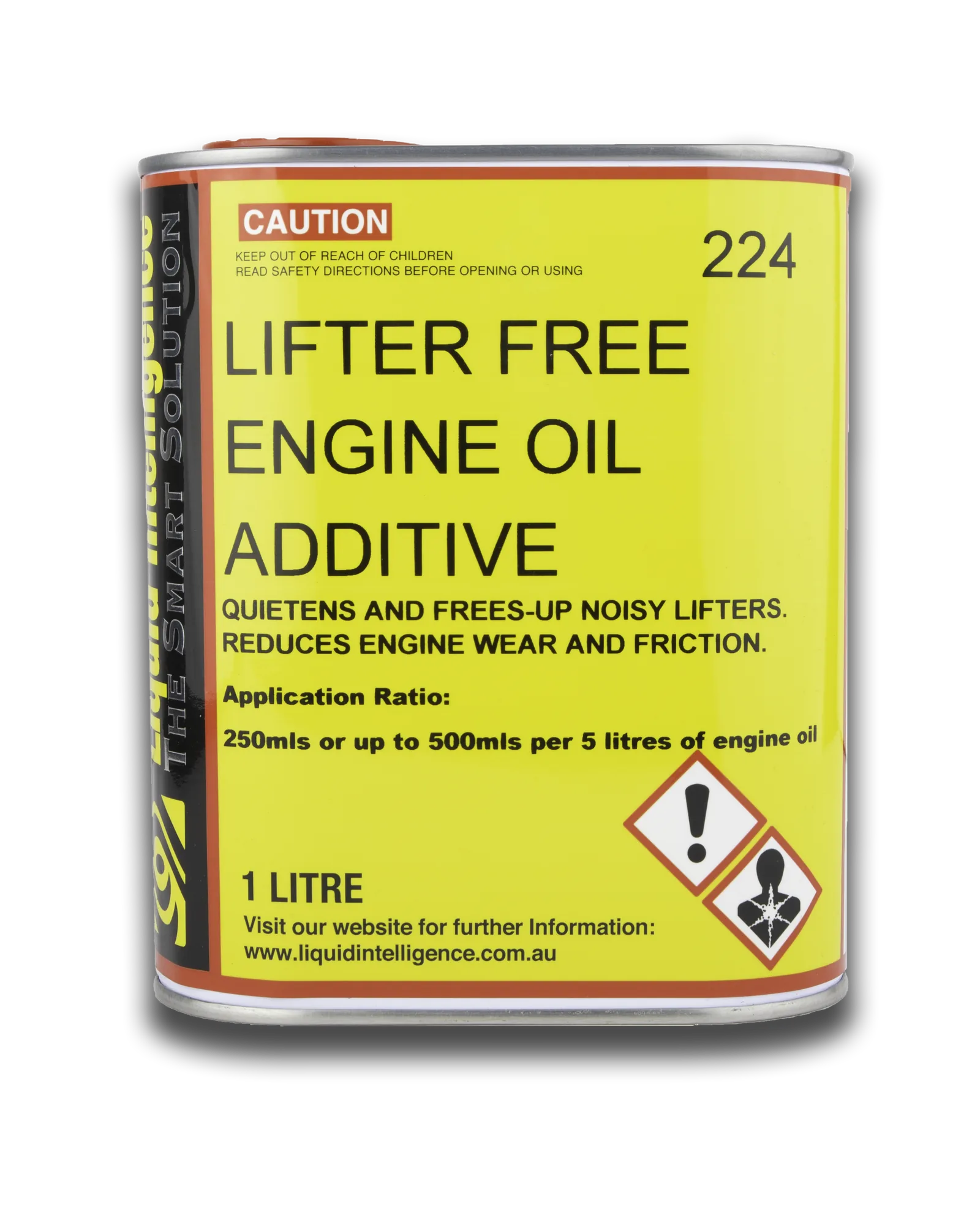
Liquid Intelligence No. 224
Lifter-Free Oil Additive
$116
Buy nowStops lifter clacking by dissolving varnish and carbon deposits.
- ✓Stops hydraulic lifter clacking
- ✓Dissolves varnish and carbon in oil passages
- ✓Fraction of the cost of lifter replacement
- ✓Simple add-to-oil application
Lifter-Free Oil Additive
“I guarantee you too can stop the causes of lifter clacking now, once and for all, with Liquid Intelligence 224 Lifter-Free Engine Oil Additive. It really does do exactly what it says.”
✓ 100% satisfaction guarantee: you have everything to gain and nothing to lose.
Liquid Intelligence 224 dissolves and dislodges the harmful varnish and carbon deposits that accumulate within the oil passages of hydraulic lifters, replacing the clack, clack, clack with normal engine noise. You can usually hear a difference straight away, and it keeps getting better.
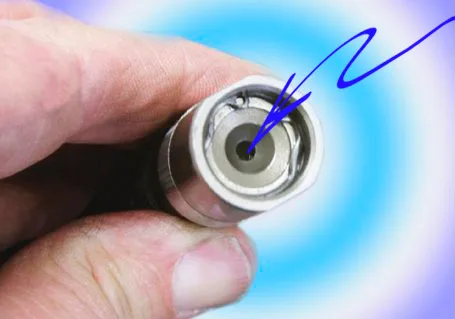
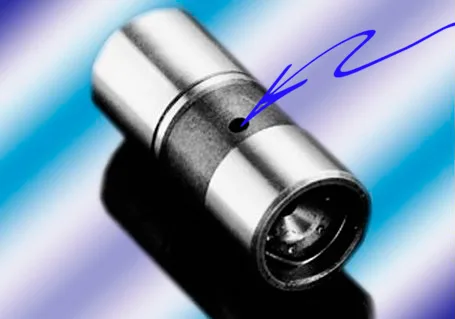
It also removes sludge and soft carbon, cleans the oil galleries in the lifters, frees sticky lifters and maintains oil viscosity.
It suits petrol, gas and diesel engines, is safe in older engines and in all types of engine oil, won't harm seals or gaskets, and can stay in until the next oil change.
Diagnosing lifter noise
A brief rattle from the valve train on start-up is normal: oil drains out of the lifters while the vehicle is parked, and the noise usually lasts only a second or two. A rattle or ticking that doesn't go away is different.
First check the oil level. Noise that doesn't stop once the engine warms up can mean there isn't enough oil to build the pressure the lifters need. If the level is right and the noise carries on, the oil passages in the lifters may be blocked.
224 is also an inexpensive way to find out which it is. Add it to the engine oil: if the noise hasn't gone after a day or 10km, you can assume earlier mechanical damage is causing it. That's what a smart mechanic does before pulling an engine apart, because a lifter repair for mechanical damage costs upwards of $1,000, and $3,000 or more on some vehicles. Lifter noise is metal-to-metal contact and only gets worse, but caught early, the damage can be stopped.
What causes lifter noise
Lifter noise is often caused by poor maintenance, such as not changing the oil at the right intervals. As the oil oxidises it forms hard carbon deposits; particles break away, are carried into the lifter and build up there, restricting the oil flow. Poor servicing also forms varnish, which reduces the lifter's tolerances and makes it stick. The noise can come from:
- Sludge, wax or varnish deposits making a lifter sticky
- Hard carbon particles blocking the relief or delivery ports
- Broken parts inside the lifter, such as the relief valve spring
- Mechanical damage to the camshaft lobe or the lifter
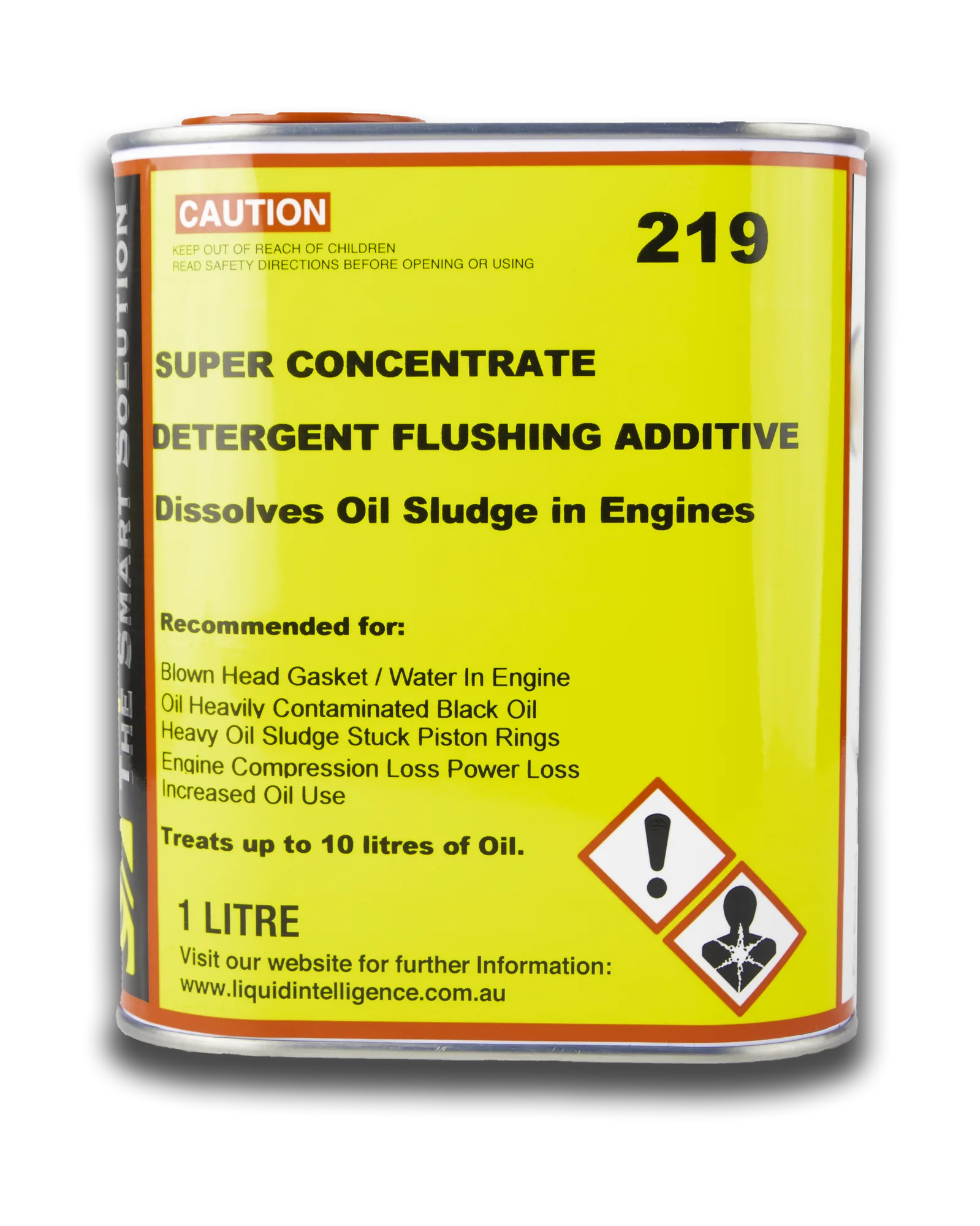
224 fixes the first two. Mechanical damage and broken parts can only be fixed by replacing them. For a heavily sludged engine, flush it with 219 Engine Flushing Additive before the oil and filter change.
High-viscosity oils make it worse
Thick oil flows through a lifter more slowly and takes longer to pump it up, which gives particles more chance to settle there. It also drains away from the cylinder head, the hottest lubricated part of the engine, more slowly, and circulates more slowly, so it carries heat away less quickly. It oxidises more readily as a result, forming more carbon and sludge.
What a hydraulic lifter does
A hydraulic lifter, or hydraulic tappet, keeps zero clearance in the valve train. Conventional valve gear needs a small gap between the valve and its rocker or cam follower to allow for expansion and wear, and periodic adjustment. A hydraulic lifter is a hollow, expanding piston between the camshaft and the valve, filled with engine oil from an oil gallery. While the valve is closed, the lifter fills with oil; as the camshaft opens the valve, the oil feed is blocked and the lifter acts like a solid one, because oil can't be compressed. The result is quieter running and no valve clearance adjustments, as long as the oil can get in.
Instructions/How to Use 224
After changing the engine oil and filter, add 250ml to 500ml of 224 for every 5 litres of engine oil capacity: 50ml per litre of oil, with the best results at 100ml per litre.
It can take a day or 10km to reach its full effect, and it can stay in the engine until the next oil change.
or 4 interest-free payments of $29 with 
Secure checkoutVisa
- ✓ Prices in Australian dollars and include GST
- ✓ Direct from the manufacturer: formulated and made in Minchinbury, NSW
- ✓ Free technical phone support before and after purchase
Free expert help
Questions about your vehicle, or how to get the best result? Call Peter, who formulated it.
Call 1800 441 163Or 02 8188 2060 · 7am–7pm, seven days