Restores your entire cooling system's efficiency back to new.
✓Dissolves ferrous and mineral scale
✓Stops overheating caused by blocked systems
✓Two-part professional process: clean + condition
✓Guided by free expert phone support
Cooling System Cleaning Kit
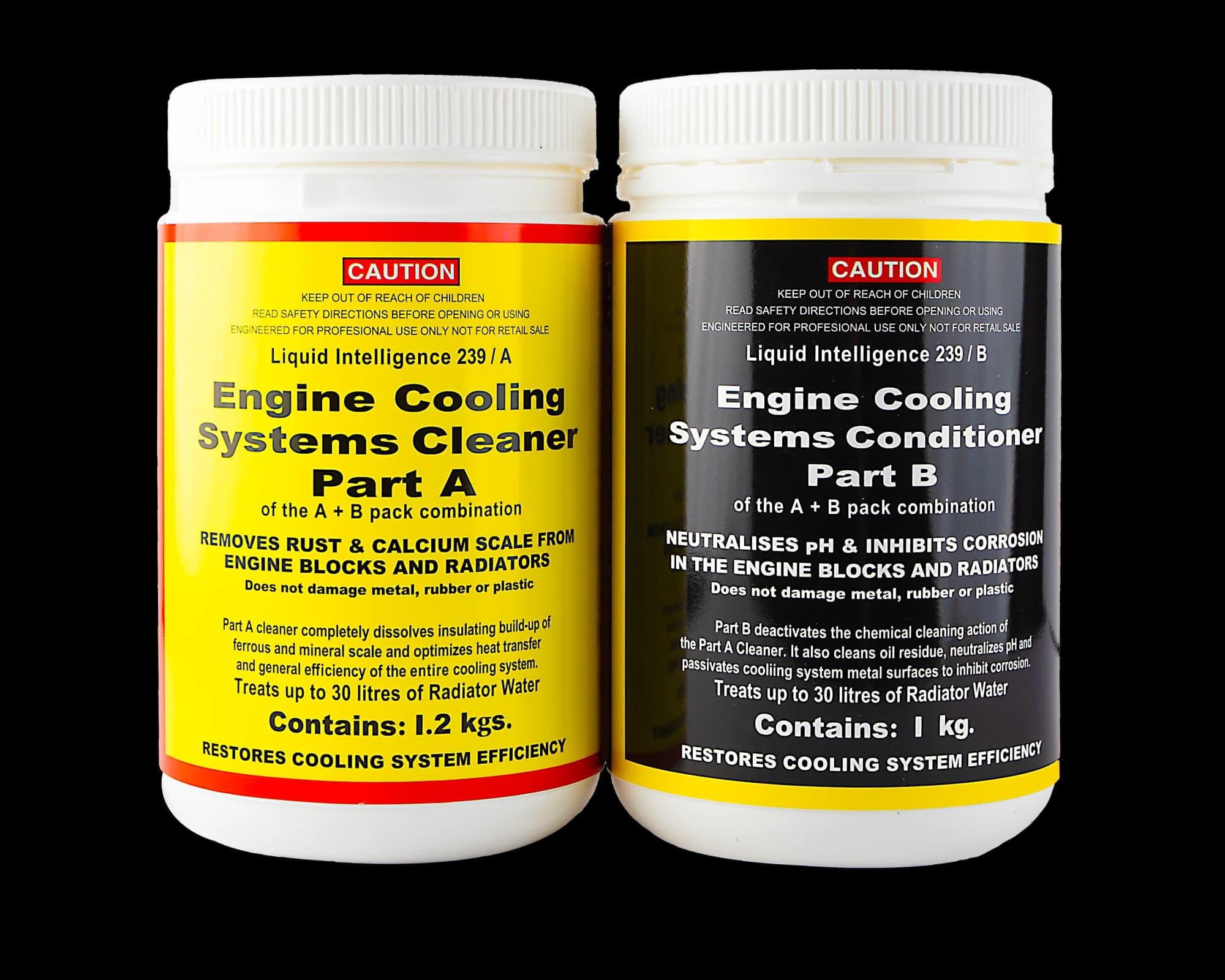
Liquid Intelligence 239 cleans the radiator and the engine block's water jacket together, without taking anything apart. It dissolves the insulating build-up of ferrous and mineral scale that can make an engine overheat.
Hard water, heat and time build that scale. Cooling system water carries dissolved minerals, such as calcium carbonate, magnesium calcium carbonate, calcium sulphate, magnesium sulphate and sodium chloride, which over the years form calcium deposits and corrosion scale in the radiator and block. The scale insulates the metal from the coolant: rust scale one millimetre thick on the walls of the water jacket can cut the cooling system's heat transfer by as much as 30%, and the engine runs hotter.
The kit works in two parts. Part A does the cleaning: it completely dissolves the scale in the water jacket and the calcium in the radiator. Part B then deactivates Part A's cleaning action, brings the pH back to neutral, cleans out oil residue and the old mud and sludge that settle in the system, and passivates the metal surfaces to inhibit further corrosion. One kit treats up to 30 litres of cooling system capacity; a badly fouled system may need two treatments.
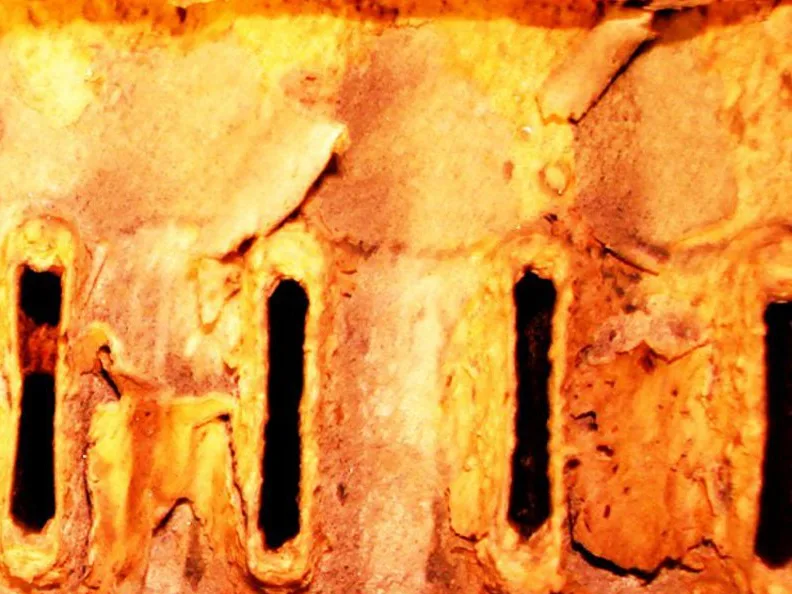
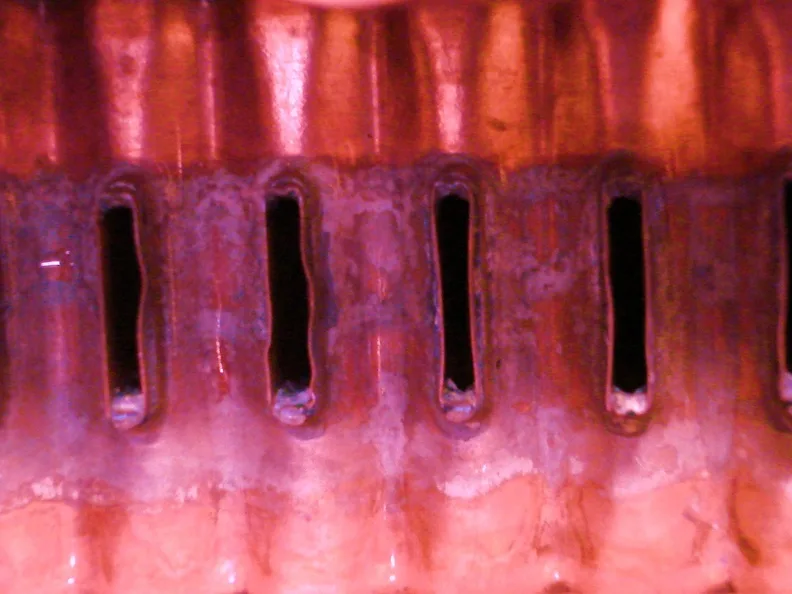
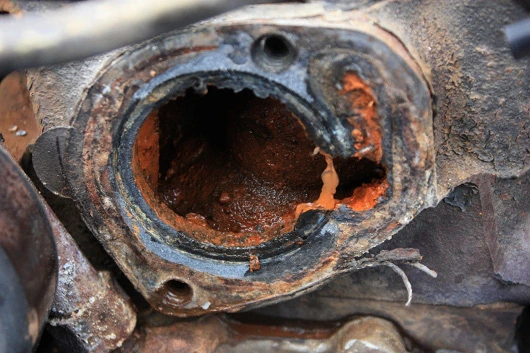
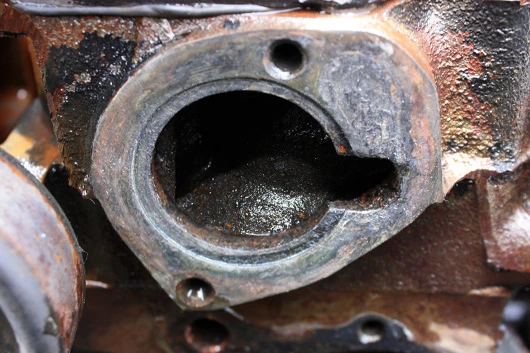
On a vintage car that kept overheating, a fibre-optic camera was put into the radiator's top tank and the engine's water jacket before and after a clean with 239, which took a little more than three hours. The after pictures show all the ferrous and mineral scale dissolved, and the owner reports the car now runs considerably cooler.
Radiator, beforeRadiator, after
Water jacket, beforeWater jacket, after
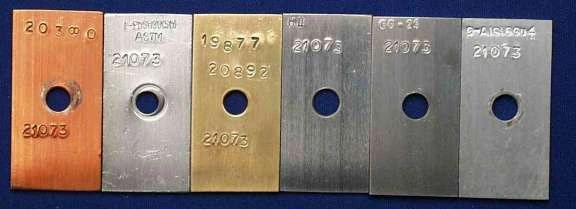
239 combines safe organic reactant cleaners, pH neutralisers and metal conditioners, and won't damage the metal, rubber or plastic in a cooling system. In the ASTM D1384 corrosion test, Part A dissolved in water was held at 88°C for 12 hours with coupons of copper, solder, brass, steel, cast iron and cast aluminium. They came out with no pitting or tarnishing and no discernible loss of weight.
Is scale causing your overheating?
An engine that runs hot in stop-start city traffic, idling at the lights on a hot day or on a long hill climb, with the temperature gauge creeping past centre, is a strong sign that its cooling system is compromised by a build-up of calcium and rust scale. Hot spots in the block and head cause detonation, or pinging, and whenever the temperature climbs past normal the engine is running in the danger zone.
Why a quick flush won't fix it
A 300 mL bottle of fast radiator flush won't remove what took years and thousands of kilometres to build up, and most fast flushes contain acids that damage copper, aluminium, brass and zinc alloys.
Why new parts won't fix it either
The usual next step is new parts: a new or larger radiator, a thermostat, hoses, fresh coolant, perhaps a water pump or an electric fan. They mask the symptoms, but if the radiator needed cleaning or replacing because of deposits, the engine block and cylinder head are coated with the same deposits.
Where to use it
Anything with a liquid-cooled engine, whether it runs on coolant or plain water: vintage, classic and late-model cars; work and recreational vehicles; light and heavy commercial vehicles and road haulage; earthmoving, mining and construction equipment, cranes and forklifts; tractors and farm machinery; generators and stationary engines; boats and ships.
A workshop clean, in photos
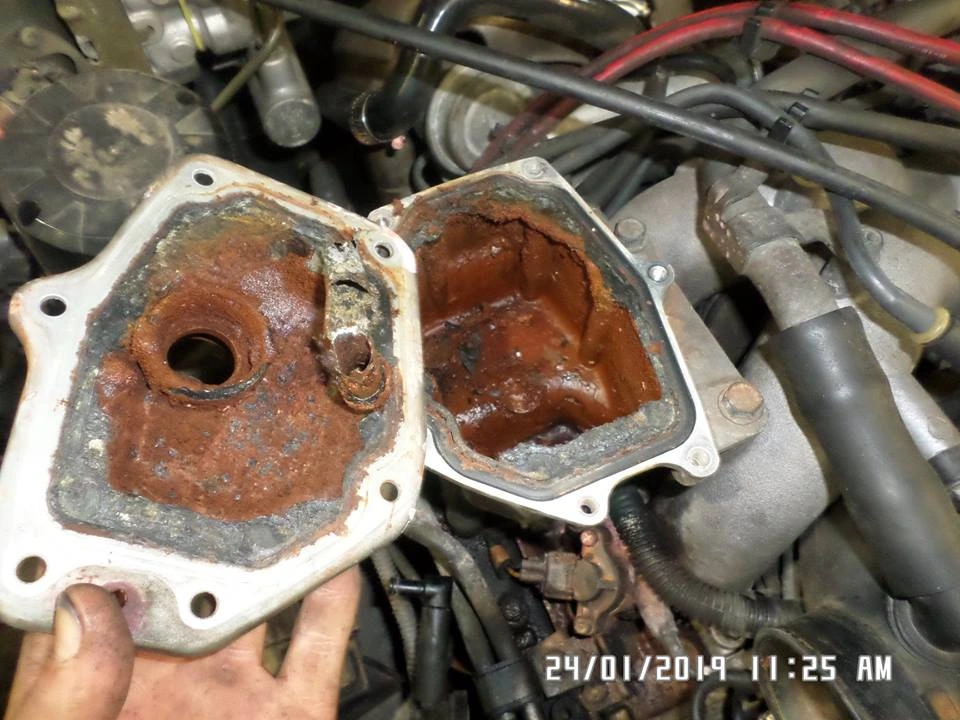
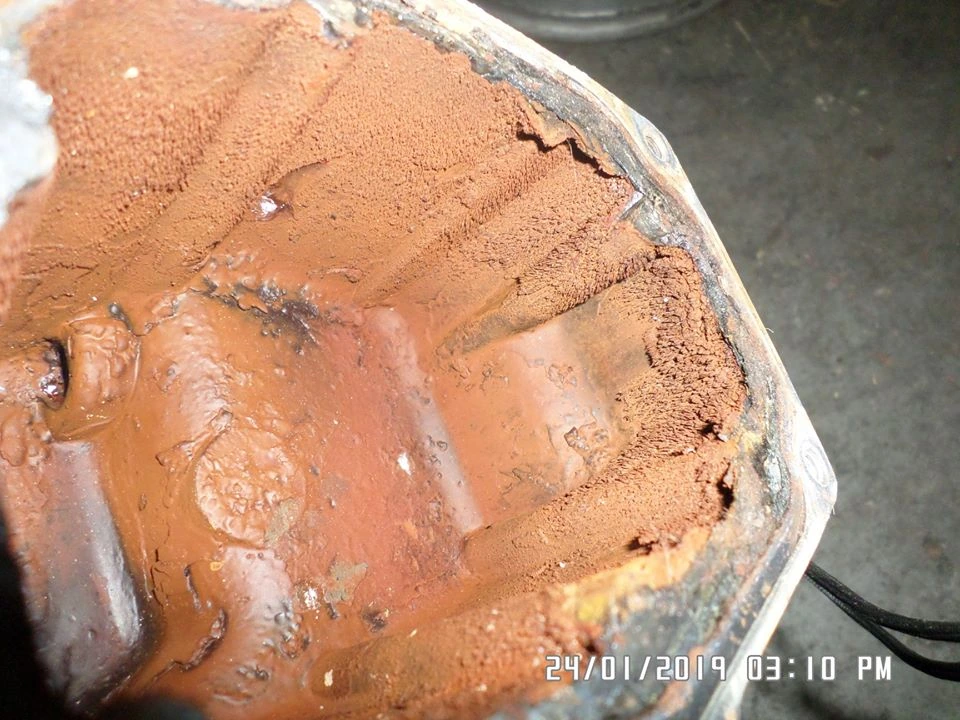
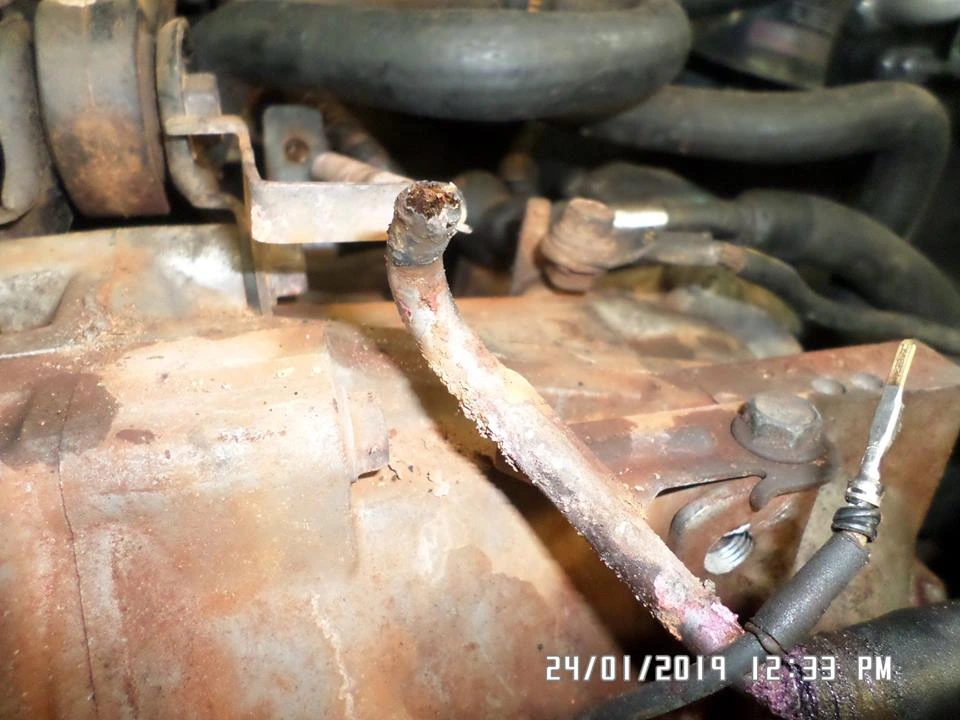
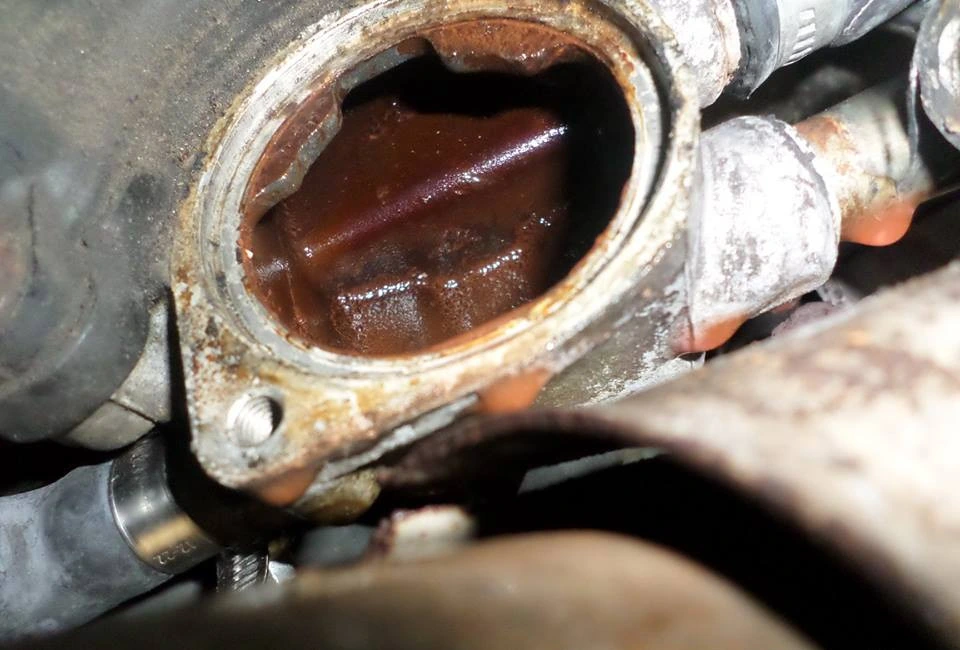
NRG Automotive Repairs in Rydalmere, NSW, cleaned a badly corroded cooling system with 239 and photographed the job. As they point out, corrosion eats a cooling system from the inside, and cleaning it out can uncover damage that was hidden. On this one, the corrosion had eaten away the pipe ends where the hoses seal.
With the top offInside the tank: that's a rubber seal around the topPipe ends eaten away where the hoses seal
The water pump beforeThe water pump afterAll cleaned up
Instructions/How to Use 239
How long the clean takes depends on how much scale is in there: from a few hours for a late-model engine with a light dusting of rust, to as long as ten days for a badly scaled one. The colour of the liquid tells you where you are, so read this through before you start.
How to use the 239 Cleaning Kit. Peter Maher takes you through preparing the vehicle, both parts of the clean and the final flush. About 18 minutes.
1. Prepare the vehicle
Drain the old coolant and flush the system out as thoroughly as you can, so only Part A and water go in.
Take the thermostat out. You'll be idling the engine, and with the thermostat out the solution flows from the start. Flow, turbulence and heat are what make 239 work.
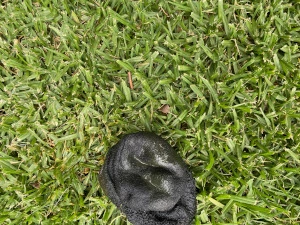
Fit a filter in the top hose. Part A breaks down the soft top layer of rust quickly, releasing flakes of shale and scale that the water pump can carry into the radiator tubes or the heater core and block them. A proprietary in-line top hose filter works, or do as we do and use a thin, summer-weight cotton-nylon business sock: its weave stops anything big enough to block a radiator tube but lets the coolant flow freely. Disconnect the top hose from the radiator, push the sock toe-first into the top tank, fold its cuff back over the outlet, then refit the hose over it and clamp it. With the engine running, the sock balloons open inside the tank and catches the debris.
2. Mix and add Part A
Use one heaped spoonful of Part A per litre of cooling system capacity: a 10 litre system, such as a Falcon's, takes 10 heaped spoonfuls. Be generous, and don't level them off.
Dissolve it in a bucket with a couple of litres of hot water, from the kettle or the hot tap, and stir until it has fully dissolved. It must be hot: in cold water it takes an age to dissolve.
Pour the solution into the empty cooling system, top it up from the garden hose and refit the cap.
3. Run Part A until the liquid runs clear
Part A is ten times more effective at removing scale at 70°C or higher than at room temperature, so the more heat, flow and turbulence, the faster it works. We don't recommend driving the vehicle with Part A in, in case something goes wrong away from home: idle it instead.
Start the engine and idle it up to the centre of the temperature gauge, then switch off and let it cool. Repeat, again and again, to keep the solution moving and reacting. A weekend suits: start on Saturday morning and check it on Sunday afternoon.
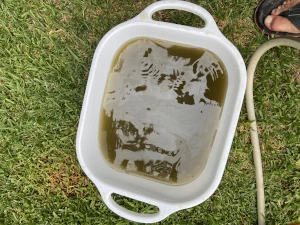
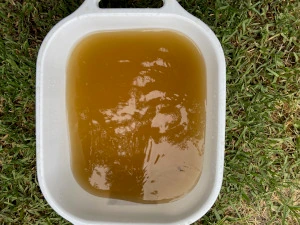
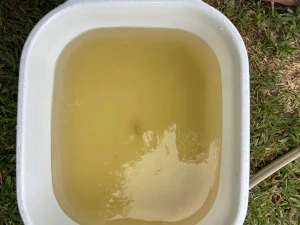
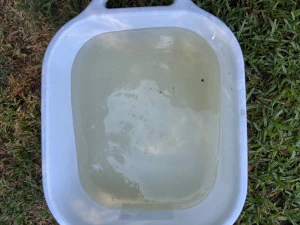
Watch the colour. The solution goes in clear. As Part A breaks down the soft top layer of rust it turns a murky brown, like pea soup. As it reaches the harder, denser scale below, it lightens to the colour of light beer. As it gets back to bare cast iron, it goes clear again.
Once it's clear, Part A has done its job. It may still look a little muddy from dirt and clay in the system, which is fine; it shouldn't look rusty. If it still has colour, keep going a day at a time until it clears.
4. Flush out Part A
Drain Part A and flush the system every way you can, but don't worry if it won't all come out. Part A breaks the rust down into iron salts, a fine orange-red powder that clings to metal (on the top of the radiator tank it looks like surface rust), and a garden hose won't reach the back of the engine or the head. Part B deals with what's left.
5. Mix and run Part B
Dissolve the same number of heaped spoonfuls of Part B as you used of Part A in a couple of litres of hot water. Pour it into the empty system, top up from the hose and refit the cap.
Bring the engine up to temperature and switch off, two or three times, so the water pump circulates it.
Leave it overnight to soak. In the morning, bring it up to temperature once more, then drain it.
Part B turns the iron salts from orange-red to black and loosens their hold on the metal, so they flush out far more easily. It comes out dark, if not black, and that's where most of the debris comes away. Drain it on gravel rather than clean or coloured concrete, which it will stain.
6. Flush until it runs clean
Flush out what you can with the hose, then fill the system with water and run the engine with the cap off for a short time, so the water pump stirs the remaining particles up.
Switch off and drop the bottom radiator hose before the engine gets too hot, so you can refill with cold water straight away.
Catch the water in a bucket or saucepan tilted under the outlet. It will overflow, but the heavy iron salts settle in the bottom, so you can see how much came out.
Refill, run and drain again. Each flush brings out less. Keep going until nothing comes out but clean, clear water.
Remove the filter sock, refit the thermostat and fill with the correct mix of coolant.
Don't skip the final flushes. Leftover iron salts do no harm, but they turn fresh coolant brown within a day or so. Flushed out properly, the new coolant stays bright and clean.
Every cooling system is different, so call us before you start if you're unsure about any of it, and as often as you need to along the way. Advice is free, 7am–7pm, seven days, on 1800 441 163.
Delivery
AusPost, Australia-wide from Minchinbury, NSW.
International
AusPost International. New Zealand at checkout; elsewhere, ask us for a quote.
Made here
Formulated and made in Australia.
Support
Free phone help, 7am–7pm, seven days.
✓ Prices in Australian dollars and include GST
✓ Formulated and made in Australia
✓ Free technical phone support before and after purchase
Not sure this is the right fix?
Call and describe the problem. We'll tell you honestly whether this product will solve it, before you spend a cent.
“Let me tell you it has worked perfectly, the old girl runs about 10 degrees f cooler”
Read the full story
Sorry it has taken so long to reply, (I purchased the liquid intelligence 239 back on the 16th July 2013) but I have only just finished using the engine block cooling system cleaning kit.
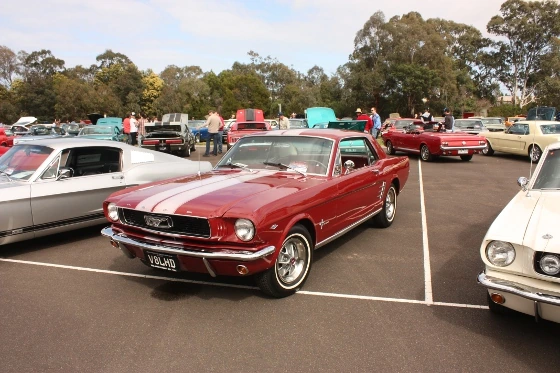
Let me tell you it has worked perfectly, the old girl runs about 10 degrees f cooler it is indeed a wonder solution. I will be spreading the word at my next car club meeting.
David Evans1966 Ford Mustang
“…since i used the product my 1968 HK Holden has not overheated at all.”
Read the full story
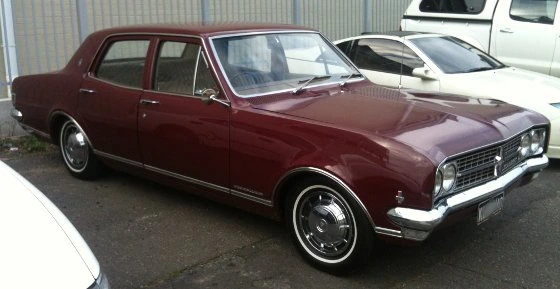
I would like to thank you for all your help and for the great product you supplied me to fix my over heating problem since i used the product my 1968 HK Holden has not overheated at all. I would have no problem in recommended this fantastic product to anybody.
Terry King1968 HK Holden
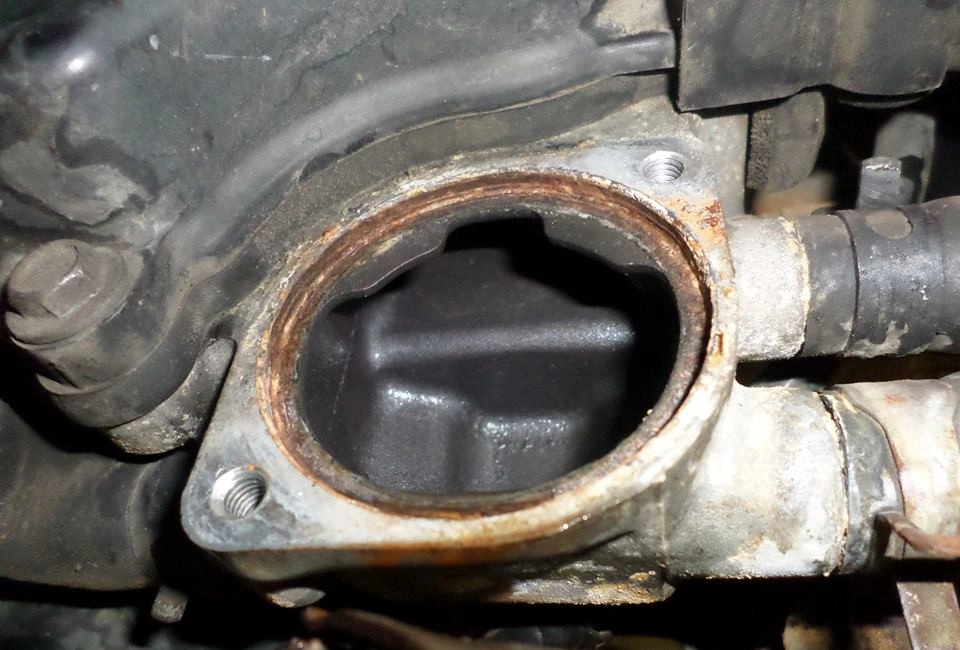
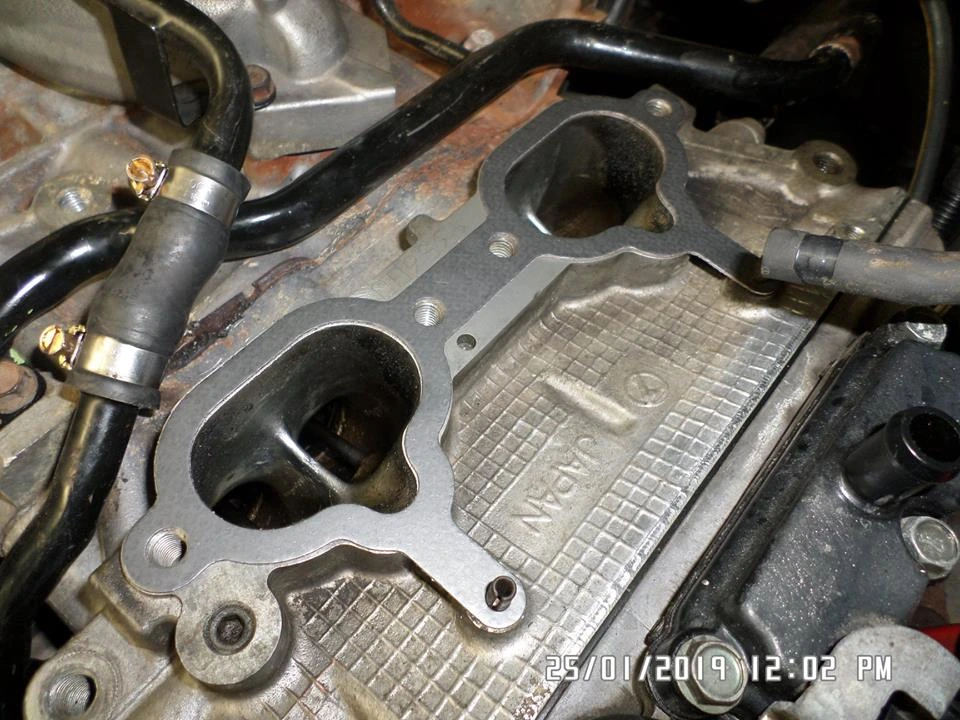
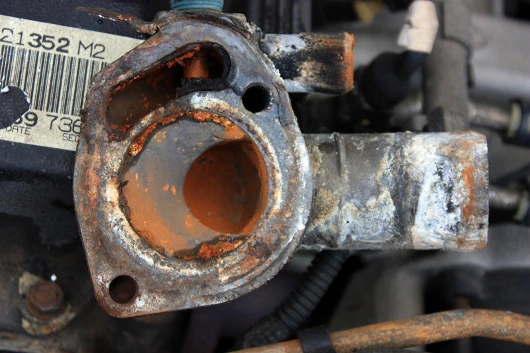
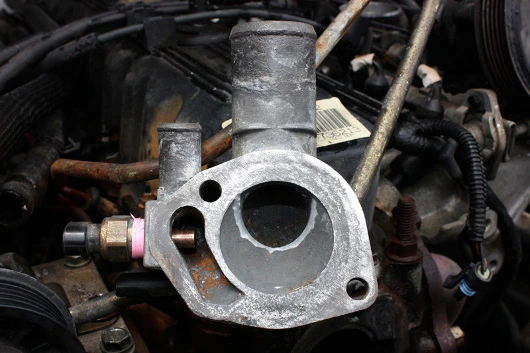
Before: the thermostat housingAfter Liquid Intelligence 239
“The heater core went from a trickle to the full force of the garden hose.”
Read the full story
I can vouch for the awesome of this stuff.
We used it on a Jeep with a bad overheating problem on the weekend and the results were amazing. The flow through the engine doubled after the treatment and the water galleries ended up pretty much spotless. The heater core went from a trickle to the full force of the garden hose.
We replaced the radiator due to leaks, but when we cut it open to have a look, ALL the channels had been cleared out and were flowing water.
I know I won’t be bothering with the stuff in a single bottle from the local parts outlet anymore. Oh, and the overheating problem has totally disappeared.
Before: inside the cylinder headAfter Liquid Intelligence 239
Just Alloy RadiatorsRadiator specialists · A Jeep with a bad overheating problem
More reviews (6)
“I’m happy to report that my 1997 Commodore is likely running better now than it did when it was new.”
Read the full story
I purchased the Radiator and Block Cleaning Kit along with the Seal Expander earlier this year and wanted to share my experience.
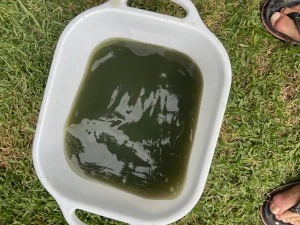
I tackled the radiator clean over the weekend, which ended up taking a few days in total. For Part A, I followed your video’s advice and used a sock as a filter (as shown in the attached image). I also used a sock for Part B, though I don’t have a picture of that one. Both caught a lot of debris, with the sock from Part B being particularly grimy! I’ve also attached a few images of the water from Part B for reference. I think I drained it about 7 or 8 times altogether. And as you can see it progressively became cleaner.
In addition to the cleaning, I replaced the radiator hoses and thermostat, which were long overdue. They hadn’t been changed since I got the car in 1998!
The car is now running great. I took it for a short drive after the clean, and everything seemed fine. I’m planning a longer trip to visit my mum in Laurieton this Christmas, which will be the real test, but I’m confident the cooling system will be much more efficient now given the amount of gunk I cleared out.
I also added some of the 230 Seal Expander to the power steering unit and will monitor its performance.
It’s now a few weeks later and I’m happy to report that my 1997 Commodore is likely running better now than it did when it was new. During a recent trip, it handled a substantial load over several days in high ambient temperatures, and the temperature gauge stayed in the lower third throughout. I couldn’t be more pleased with the results!
I’ve already shared your details with several people and will continue to do so. Thanks again for such excellent products!
Water from Dale’s Part B flushes, early on: almost blackWater from a later Part B flush: murkyA later flush: amberFurther on: pale yellowOne of the last Part B flushes: nearly clear
He had an ongoing overheating problem and talked it through with Peter before using the 239 kit; his sock filters caught iron salts, rust and sludge over two days of flushing.
“…this product has stopped me from having to remove the engine and caustic washing the block and rebuilding the engine”
Read the full story
on using the kit provided I was concerned when I saw a yellow film starting to form in the top tank of the radiator and the inline filter in the top radiator hose regardless I proceeded as described on the part a can for the 7 days recommended I then flushed the system this did take some time about 10 fills of the system including running the motor to ensure all of the part A was flushed out I then added the part B ad described and let stand for 16 hours at this time it had converted the yellow film this I then flushed out it also took about 10 refills of the cooling system and running the engine to operating temp to flush the inspection of the top tank and in line filter were as described free of any sign of yellow film or rust build up and clean of any dirt
I am satisfied with the product and will be telling others of the product that it does work and will clean your classic car and will not damage you pride and joy while doing its job this product has stopped me from having to remove the engine and caustic washing the block and rebuilding the engine to resolving the water core rust scale problem I had in the block thank your again for your help I will now be looking for something to restore my diff pinion seal and engine crank main seal and timing cover seals on my ford 9″diff and 289 ford small block engine
Brendan Hogan1967 Ford Falcon (USA) 2 door, 289 small block
“I’m happy to inform you that the problem is solved and thank you very much!!”
Read the full story
I recently purchased and used your product the 239 Liquid Intelligence engine cleaning kit. I have a sailing yacht with a small auxiliary diesel engine which is cooled directly by seawater (after filtering).
For a long time I have been trying to fix an intermittent cooling problem with no success. I had replaced the thermostat, sensor and exhaust mixing elbow with no success.
So I researched a bit on Google and found your product. I mixed it in a plastic rubbish bin and recirculated it through the engine for a bout half an hour. I then left it to stand for a week , recirculated it again and then flushed the engine with Part B of the kit . After that I flushed the engine and ran seawater through as per normal. I’m happy to inform you that the problem is solved and thank you very much!!
“I am always sceptical on claims made about products, but wow I am now converted, I could not believe how much rubbish was removed from my cooling system”
Read the full story
Just a thank you message for the tech support on Liquid Intelligence I am always sceptical on claims made about products, but wow I am now converted, I could not believe how much rubbish was removed from my cooling system, if anything it’s probably too cool know. This job was a legacy of the previous owner who rebuilt the motor without acid dipping it before the rebuild Thank you for the customer service and a great product. Your seven day a week tech support was particularly appreciated.
The engine bay of Chris Bunt’s Valiant
Chris Bunt1962 Valiant
“I used your Liquid Intelligence 239 kit and it now shows well under half on the temp gauge scale in the same running conditions.”
Read the full story
I want you to know that your product has worked a treat on my 1974 Triumph 2500 TC.
I recently bought this car which is low mileage but 46 years old. Only 40,000km but has been kept in the shed for most of its life.
It ran hot and would go to extremely hot when in slow traffic. I used your Liquid Intelligence 239 kit and it now shows well under half on the temp gauge scale in the same running conditions. I was about to remove the radiator, and have it cleaned or replaced but was encouraged to try this product by a local engine restoration person (whom hasn’t used the product but has seen it on line). His theory was to at least clean the engine out first and so determine if the radiator alone is the cause. Obviously, this product works well.
His 46-year-old engine had rust scale on the water jacket walls and ran hot in traffic before the clean.
Ron1974 Triumph 2500 TC
“After using your radiator and block cleaner my 1934 Humber runs 15 degrees colder.”
Read the full story
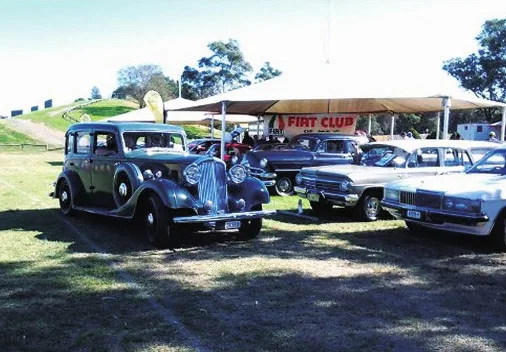
Here we are at Eastern Creek with “Dame Edna” going out for the parade laps. After using your radiator and block cleaner my 1934 Humber runs 15 degrees colder. I now spend more time watching the road and less watching the gauge and worrying.
Helen sent the email with a photo of her Humber heading out for parade laps at Eastern Creek.